Integrated circuits (ICs) are the backbone of modern electronics, enabling everything from smartphones and computers to cars, industrial machinery, and medical devices to function efficiently. They are often described as “tiny brains” inside electronic systems, integrating millions or even billions of transistors into a single chip. Without ICs, the world as we know it today—connected, digital, and automated—would not exist.
To understand their diversity, it’s important to look at the types of integrated circuits available, their classifications, and their specific functions in electronics.
1. Classification by Function
a. Analog Integrated Circuits
Analog ICs deal with continuous signals and are widely used in applications where sound, light, or other natural phenomena must be converted into electrical signals. Examples include:
Operational amplifiers (Op-Amps): Used in signal processing, filtering, and mathematical operations.
Voltage regulators: Provide stable power to devices despite fluctuations in input.
Analog multipliers and comparators: Useful in communication systems and measurement devices.
b. Digital Integrated Circuits
Digital ICs process discrete binary data (0s and 1s). They form the foundation of computing and digital communication. Examples include:
Logic gates (AND, OR, NOT, NAND, NOR, XOR, XNOR)
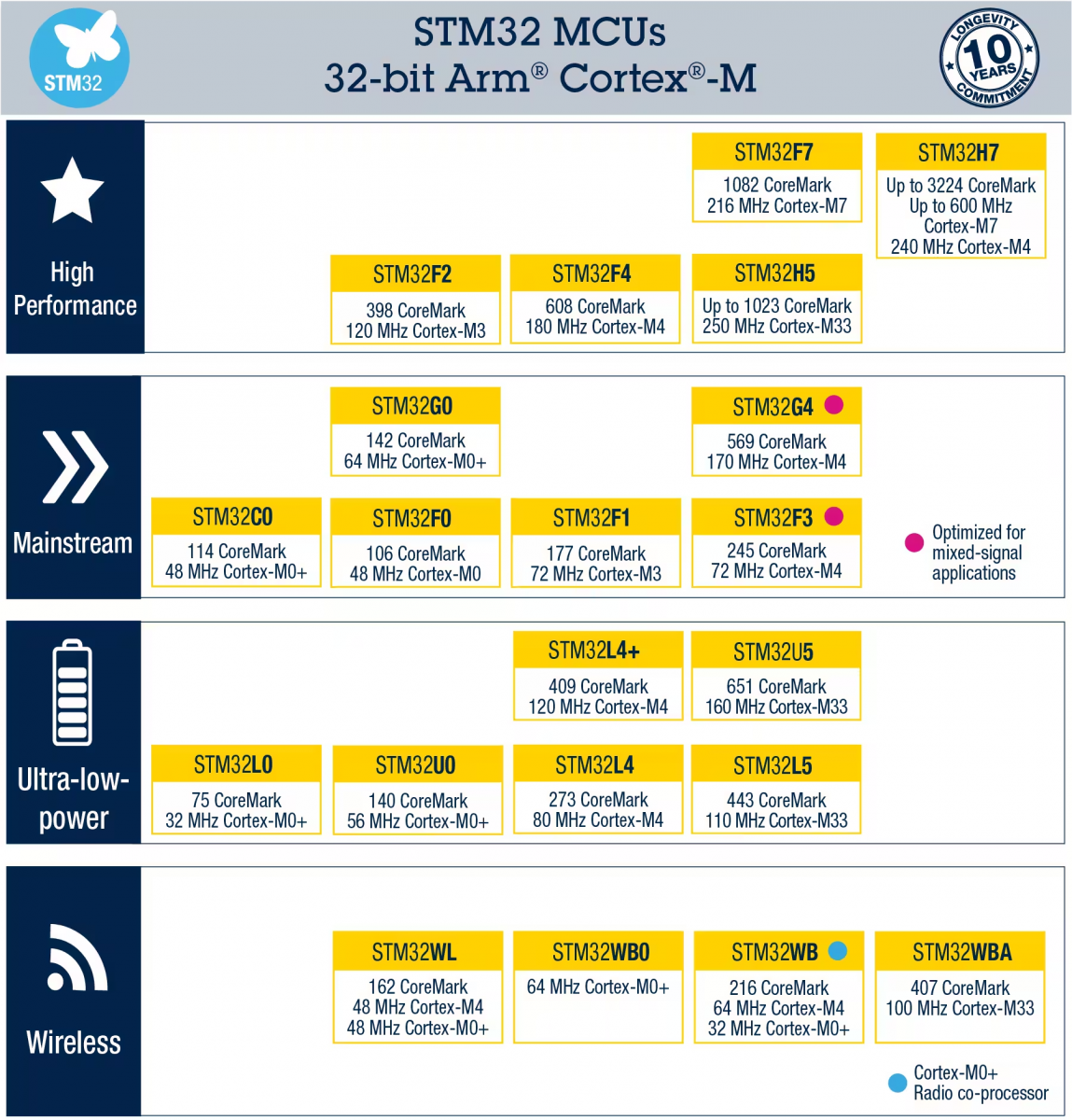
Microprocessors and microcontrollers
Memory chips (RAM, ROM, Flash storage)
Digital ICs are known for high speed, low cost, and compact size, which makes them indispensable in consumer electronics and computing systems.
c. Mixed-Signal Integrated Circuits
These combine both analog and digital functions on a single chip. For instance, in smartphones, mixed-signal ICs are used in audio codecs, RF systems, and sensor interfaces. This integration reduces cost and space while improving performance.
2. Classification by Scale of Integration
ICs are also categorized based on the number of electronic components (transistors, resistors, capacitors) packed into a single chip.
SSI (Small-Scale Integration): Fewer than 100 transistors, typically used in simple logic gates.
MSI (Medium-Scale Integration): Between 100–1,000 transistors, often in counters and multiplexers.
LSI (Large-Scale Integration): 1,000–100,000 transistors, used in simple processors and memory.
VLSI (Very-Large-Scale Integration): More than 100,000 transistors, found in microprocessors, GPUs, and advanced controllers.
ULSI (Ultra-Large-Scale Integration): Millions to billions of transistors, powering today’s high-performance computing and AI chips.
3. Classification by Application
a. Logic ICs
Used for decision-making operations in computers and digital systems. Their primary function is to execute binary logic.
b. Memory ICs
These store data temporarily (RAM) or permanently (ROM, Flash). Without memory ICs, computers and smartphones would not be able to run programs or retain information.
c. Microprocessors and Microcontrollers
Microprocessors: General-purpose CPUs used in laptops, desktops, and servers.
Microcontrollers: Embedded chips that combine CPU, memory, and input/output peripherals for controlling devices like washing machines, automotive systems, and industrial robots.
d. Power Management ICs (PMICs)
These manage power distribution in devices, ensuring batteries last longer and components receive stable voltage.
e. RF and Communication ICs
Found in wireless communication systems such as smartphones, Wi-Fi routers, and satellites, these ICs manage radio frequency transmission and reception.
f. Sensor ICs
Convert real-world physical signals (temperature, pressure, motion) into electrical signals for digital processing. These are vital in IoT devices, automotive safety systems, and medical monitoring equipment.
4. Classification by Manufacturing Technology
a. Bipolar ICs
Made using bipolar junction transistors (BJTs), they are known for speed but consume more power.
b. CMOS ICs (Complementary Metal-Oxide Semiconductor)
Most modern ICs use CMOS technology because of low power consumption, high density, and scalability. Smartphones, tablets, and laptops are heavily reliant on CMOS ICs.
c. BiCMOS ICs
A hybrid of Bipolar and CMOS technologies, BiCMOS ICs combine speed with energy efficiency, making them useful in RF and analog-digital mixed designs.
5. Emerging Types of Integrated Circuits
With advancements in semiconductor design, new IC types are emerging to support AI, IoT, and next-generation computing:
AI Chips / Neural Processing Units (NPUs): Specifically designed to handle machine learning and artificial intelligence workloads.
System-on-Chip (SoC): Integrates CPU, GPU, memory, and communication modules into one chip for smartphones and IoT devices.
3D ICs: Use vertical stacking of transistors to improve performance and density.
Conclusion
Integrated circuits come in a wide variety of types—analog, digital, mixed-signal, logic, memory, microprocessors, microcontrollers, and more—each with a specialized role in powering the digital age. Their classification can be based on functionality, scale of integration, applications, or manufacturing technology. With continuous innovation, ICs are becoming smarter, faster, and more efficient, paving the way for breakthroughs in artificial intelligence, healthcare, communications, and beyond.
For businesses and engineers sourcing reliable integrated circuits, choosing a trustworthy supplier is crucial.
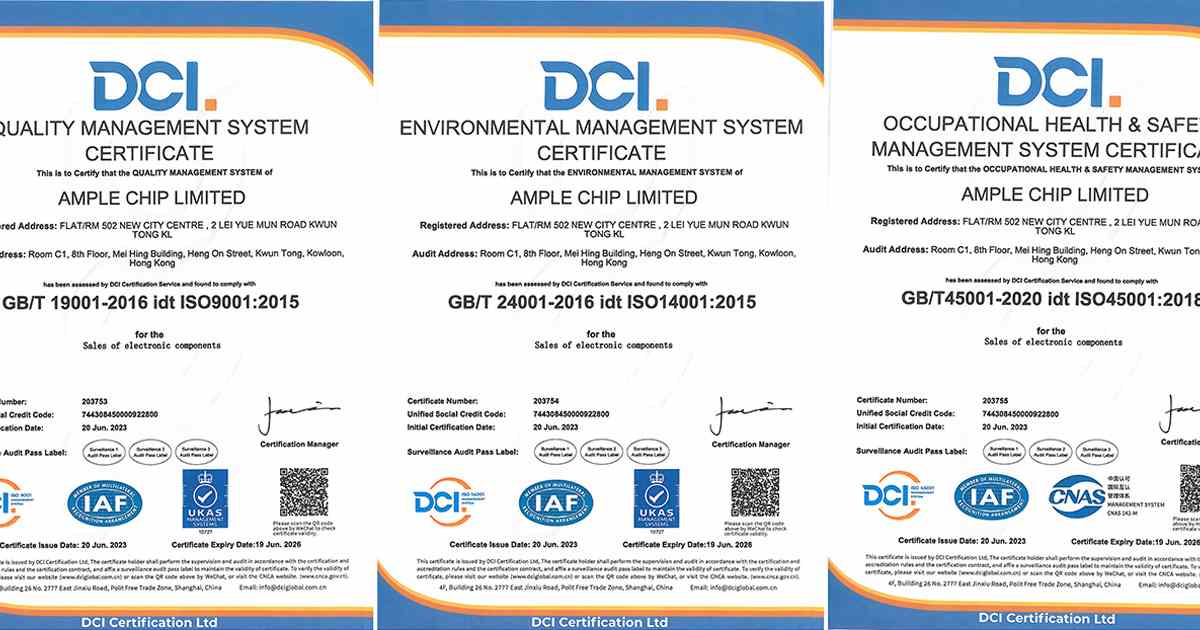
Ample Chip stands out as a professional integrated circuits wholesale supplier, providing authentic, high-quality ICs for global OEMs and manufacturers. With a strong supply chain, strict quality control, and a wide product portfolio, Ample Chip ensures that customers always receive the components they need to build innovative, reliable, and high-performing electronic systems.
Related News
What Are the Types of Integrated Circuits?
What Is an Integrated Circuit (IC) and How Does It Work?
What is a Capacitor, Its Uses, and Its Types?
A Comprehensive Overview of Capacitor Types, Features, and Applications