Capacitors are fundamental electronic components that store, regulate, and release electrical energy in almost every electronic circuit. From simple consumer devices to advanced industrial systems, capacitors play a pivotal role in ensuring energy efficiency, signal integrity, and system reliability. Modern electronics require not only standard capacitors but also a wide variety of specialized types to meet specific performance requirements.
Capacitor Accessories
Capacitor accessories are essential complementary components or tools that enhance performance, reliability, and integration of capacitors in electronic circuits. Common accessories include protective devices, heat sinks, mounting hardware, and interface components. For instance, high-power capacitors often require heat sinks to dissipate thermal energy, while clips, holders, and sockets ensure secure placement on printed circuit boards (PCBs). Using the right accessories can extend the lifespan of capacitors, reduce thermal stress, and optimize overall circuit performance.
Aluminum-Polymer Capacitors
Aluminum polymer capacitors are advanced electrolytic capacitors that utilize conductive polymer electrolytes instead of liquid electrolytes. These capacitors offer ultra-low equivalent series resistance (ESR), high ripple current handling, long service life, and excellent performance in high-frequency applications.
Applications:
Switching power supply circuits
High-frequency decoupling in embedded systems
Industrial electronics and automotive-grade circuits
Audio amplifiers and high-speed digital electronics
Aluminum Electrolytic Capacitors
Aluminum electrolytic capacitors provide high capacitance per volume, making them ideal for applications requiring large energy storage. These capacitors are polarized and must be connected with correct DC polarity. They are widely used for smoothing voltage fluctuations and providing stable energy storage in electronic circuits.
Applications:
Power supply smoothing and ripple filtering
Energy storage in LED drivers, audio amplifiers, and motor controllers
Industrial power electronics and UPS systems
Capacitor Networks and Arrays
Capacitor networks and arrays integrate multiple capacitors into a single package, reducing board space, simplifying assembly, and ensuring precise matched capacitances. These components are essential for advanced microprocessor decoupling, signal conditioning, and analog-to-digital conversion.
Applications:
Microprocessor power supply decoupling
Signal filtering and conditioning in communication modules
Precision analog-to-digital conversion
Ceramic Capacitors
Ceramic capacitors use ceramic materials as dielectrics, offering compact size, high reliability, and non-polarized operation. They perform exceptionally well in high-frequency applications and are widely used in consumer electronics, RF circuits, and high-speed digital devices.
Applications:
Power supply decoupling and bypassing
RF signal filtering in smartphones and communication devices
Timing, oscillator circuits, and signal integrity stabilization
Electric Double Layer Capacitors (EDLC), Supercapacitors
Supercapacitors, also known as EDLCs, store energy through electrostatic charge separation and offer extremely high capacitance values. They excel in applications requiring rapid energy discharge, backup power, and energy harvesting.
Applications:
Renewable energy storage systems
Memory backup and IoT devices
Regenerative braking energy storage in electric vehicles
Hybrid energy storage systems for industrial electronics
Film Capacitors
Film capacitors employ thin plastic films as dielectrics, providing excellent stability, low dielectric losses, and long operational life. They are non-polarized and suitable for both AC and DC applications.
Applications:
High-frequency signal circuits
Power factor correction
Industrial automation and automotive electronics
High-voltage pulse circuits
Mica and PTFE Capacitors
Mica capacitors provide high precision, low thermal drift, and excellent reliability. PTFE (Teflon) capacitors offer chemical resistance and high-frequency stability. Both types are used in circuits requiring accuracy and low tolerance.
Applications:
RF and microwave circuits
High-stability oscillator and timing circuits
Precision measurement and instrumentation
Niobium Oxide Capacitors
Niobium oxide capacitors offer high capacitance in small volumes and are safer than traditional tantalum capacitors in case of failure.
Applications:
Space-constrained consumer electronics
Automotive control modules
Power management circuits
Silicon Capacitors
Silicon capacitors offer high reliability and are often integrated into ICs or MEMS devices. They are ideal for applications requiring precision and long-term stability.
Applications:
Embedded systems
Sensor circuits
Timing and frequency control applications
Tantalum-Polymer and Tantalum Capacitors
Tantalum-polymer capacitors combine the benefits of tantalum and polymer electrolytes, offering low ESR, high stability, and extended life. Traditional tantalum capacitors provide high capacitance in compact packages but require careful polarity handling.
Applications:
Mobile devices and smartphones
High-speed digital circuits
Medical electronics
Voltage smoothing in automotive electronics
Thin Film Capacitors
Thin film capacitors are manufactured with extremely thin dielectric layers, providing high precision, low tolerance, and reliable performance in critical applications.
Applications:
Precision analog circuits
High-frequency filters
Industrial automation and control systems
Trimmers and Variable Capacitors
Trimmers and variable capacitors allow manual adjustment of capacitance in circuits, facilitating frequency tuning, calibration, and experimental prototyping.
Applications:
RF tuning circuits
Oscillators and filters
Prototyping and test equipment
Conclusion
The capacitor market offers an extensive variety of options, each designed for specific applications—from general-purpose decoupling to high-frequency RF systems, industrial automation, and energy storage solutions. Understanding the characteristics, benefits, and applications of each capacitor type enables engineers and designers to select the optimal component for enhanced circuit performance, reliability, and efficiency.
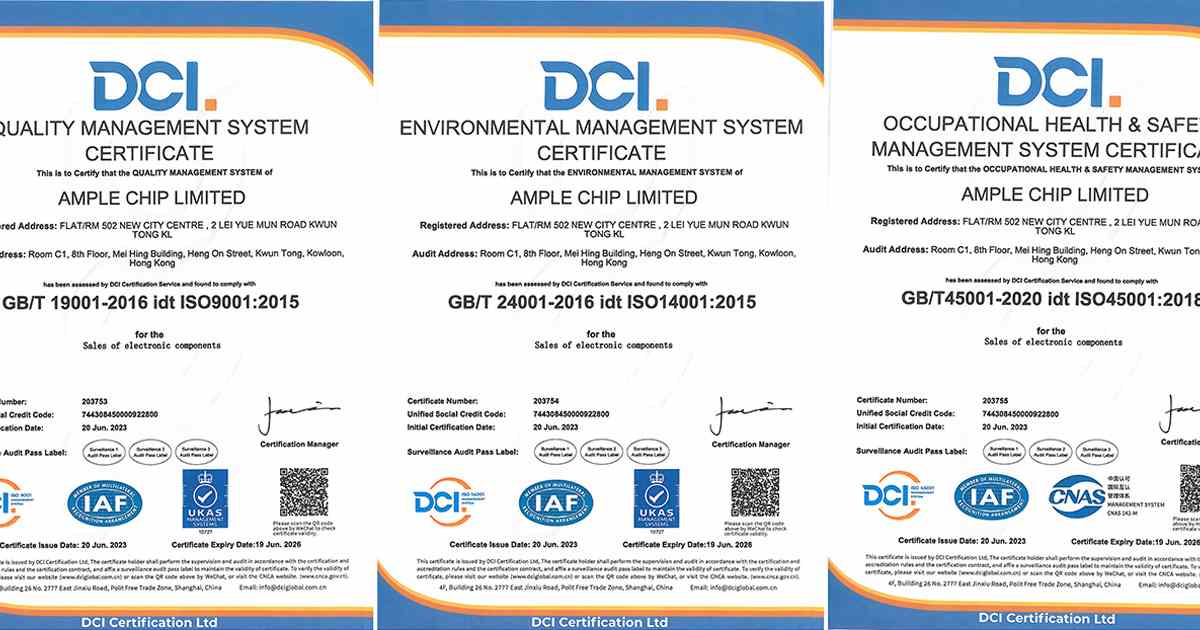
For businesses and manufacturers seeking reliable and high-quality capacitors, partnering with a trusted distributor is essential. Ample Chip is a leading capacitor distributor, providing a comprehensive range of authentic aluminum-polymer, electrolytic, ceramic, film, tantalum, niobium oxide, supercapacitors, and other specialty capacitors. With a robust global supply chain, strict quality control, and extensive inventory, Ample Chip ensures engineers and manufacturers have access to dependable components that support innovation across consumer electronics, automotive systems, industrial equipment, medical devices, and communication networks.
Related News
A Comprehensive Overview of Capacitor Types, Features, and Applications
What is a Capacitor, Its Uses, and Its Types?