In the world of modern electronics manufacturing, choosing the right electronic component supplier is a decision that can determine the success or failure of a project. Whether you're a procurement manager at a large OEM or a startup engineer developing a new product, reliable component sourcing is the foundation of quality, performance, and timely delivery.
So what separates a good supplier from a risky one? Here’s a detailed checklist every buyer should consider when evaluating electronic component vendors:
1. Authenticity and Quality Assurance
Counterfeit components are one of the most serious threats in the supply chain. A trustworthy supplier should have:
Strict quality control procedures
Access to authorized and verified channels
Component traceability to manufacturers or OEMs
In-house or third-party testing and inspection capabilities
Look for suppliers that provide Certificates of Conformance (CoC), detailed inspection reports, and have clear anti-counterfeit policies. Authenticity should never be assumed — it must be proven.
2. Wide Component Range and Inventory Depth
A great supplier should offer more than just a narrow selection. Instead, look for:
Active and passive components
ICs, connectors, discrete devices, memory, RF, and more
Obsolete and end-of-life (EOL) part sourcing
Support for both prototype quantities and mass production
The broader their inventory and sourcing network, the more they can support your needs throughout the entire product lifecycle.
3. Speed and On-Time Delivery
Time-to-market is a key competitive factor. Your supplier must be able to:
Quote quickly (ideally within 24 hours)
Ship promptly from stock or arrange fast sourcing
Handle urgent or shortage-based sourcing
Offer logistics tracking, real-time status, and delivery guarantees
Delays in shipping, customs, or communication can disrupt your production line. A responsive supplier with efficient logistics makes all the difference.
4. Flexible Procurement Options
Not all projects are created equal. A good component supplier understands that and offers:
Support for small MOQ (Minimum Order Quantities)
Cut tape, reel, or tray packaging
Scheduled deliveries or just-in-time (JIT) fulfillment
Kitting services for complete BOM supply
Drop-shipping or customer-specific packaging
Flexibility means the supplier adapts to your needs — not the other way around.
5. Strong Global Sourcing Network
Supply chains today are global, and a reliable supplier should reflect that. Look for:
Warehouses and partners across multiple regions
Relationships with OEMs, authorized dealers, and excess inventory networks
Ability to source from Asia, Europe, North America, etc.
Resilience during supply chain disruptions or component shortages
A supplier with global sourcing capabilities ensures you get what you need, when you need it — from anywhere in the world.
6. Transparent and Fair Pricing
Trustworthy suppliers offer:
Clear and itemized quotes
Competitive pricing with no hidden fees
Real-time market-based pricing updates
Open communication about price changes, availability, and alternatives
They work with you to meet your budget goals, not surprise you with extra costs after the PO is placed.
7. Professional Customer Support
You want a supplier who doesn’t disappear after the sale. Look for:
A dedicated account manager
Access to engineers for part selection or cross-referencing
BOM analysis support
Fast, knowledgeable responses to inquiries or technical questions
Multi-language support and global timezone coverage
Great service builds long-term partnerships, not just transactions.
8. Documentation and Compliance
The right supplier provides complete documentation and complies with regulations such as:
RoHS, REACH, and Conflict Minerals
ESD-safe packaging and handling
Proper MSL (Moisture Sensitivity Level) storage for ICs
Certificates of origin, test reports, and datasheets
Full compliance means less risk and smoother audits for your team.
9. Scalability and Long-Term Support
You don’t want to outgrow your supplier. They should be able to scale with your needs:
Support for NPI (New Product Introduction) to full-scale production
Flexible terms as your business evolves
Commitment to long-term cooperation
Forecast-based ordering and inventory management services
Suppliers that offer continuity give you stability, especially in long-lifecycle or mission-critical projects.
10. Proven Reputation and References
Finally, a good component supplier should be able to show:
Client references or testimonials
Case studies showing problem-solving in real projects
A long list of satisfied OEM, EMS, or design clients
Positive feedback across B2B directories, forums, or partner platforms
Trust is earned — and a solid reputation is the best proof.
Ample Chip: Your Trusted Electronics Component Partner
At the end of the day, a great electronics component supplier is one that gives you peace of mind — with every order, every quote, and every delivery.
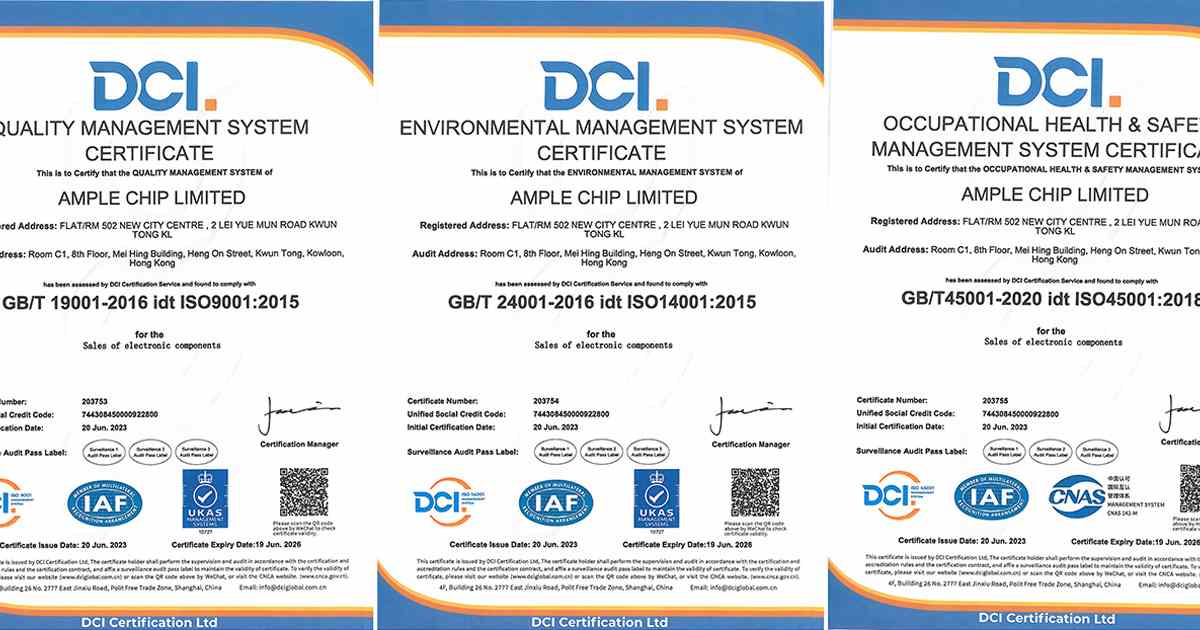
Ample Chip is a globally recognized independent agent and distributor of semiconductors and electronic components. We help OEMs, EMS providers, and engineers around the world achieve reliable, cost-effective, and efficient component sourcing through:
Authentic, quality-tested components
Extensive global sourcing networks
Spot inventory of thousands of in-demand parts
Full BOM support, kitting, and PCBA services
Fast RFQ response and multilingual customer service
Rapid delivery and flexible logistics options
Whether you're prototyping a new product or scaling to high-volume production, Ample Chip is here to support your goals with integrity, speed, and precision.