In the ever-evolving world of electronics, semiconductors are at the heart of nearly every device—from smartphones and electric vehicles to renewable energy systems and industrial machinery. Among the many semiconductor categories, discrete semiconductors and module semiconductors are two fundamental types that serve different but complementary roles. Understanding the differences between them is key for engineers, manufacturers, and businesses looking to design efficient, reliable, and cost-effective electronic systems.
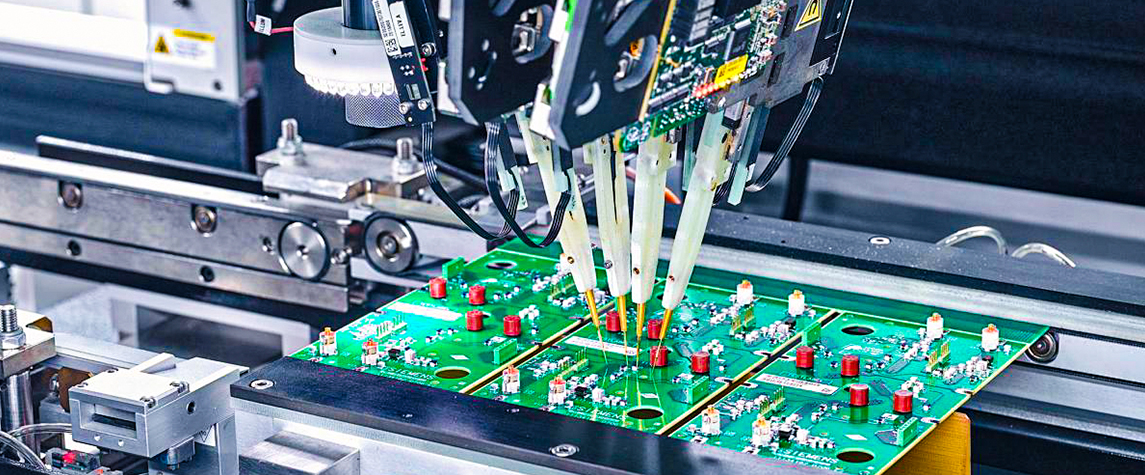
Understanding Discrete Semiconductors
A discrete semiconductor is an individual electronic component designed to perform a single, specific function. Each discrete device operates independently and is typically made from materials such as silicon (Si), gallium arsenide (GaAs), or silicon carbide (SiC). Common examples include diodes, transistors, thyristors, and rectifiers.
Discrete semiconductors are the building blocks of modern electronics. They perform essential tasks such as:
Switching electrical signals on and off
Rectifying alternating current (AC) into direct current (DC)
Amplifying signals in analog circuits
Protecting systems from voltage spikes and surges
Because of their simplicity, flexibility, and robustness, discrete components are widely used across industries — from consumer electronics and telecommunications to automotive and power management.
Advantages of Discrete Semiconductors
High Power Handling: Many discrete devices can handle large currents and voltages that integrated circuits (ICs) cannot.
Reliability: Simple construction and fewer internal components mean fewer failure points.
Flexibility in Design: Engineers can mix and match discrete components to build custom circuits tailored to specific needs.
Cost-Effectiveness: For single-purpose tasks, discrete devices are often more economical than complex modules or ICs.
However, as systems become more complex, using many discrete devices can increase board size, design complexity, and assembly time. This is where module semiconductors come into play.
Understanding Module Semiconductors
A module semiconductor, often called a power module or semiconductor module, is an integrated assembly that combines multiple discrete semiconductor devices and other electronic components within a single package. These modules are designed to handle higher power, improve efficiency, and simplify system design.
A typical module semiconductor might include combinations of IGBTs (Insulated Gate Bipolar Transistors), diodes, MOSFETs, gate drivers, and even thermal management systems integrated into one compact unit.
Modules are used in demanding applications such as electric vehicles (EVs), solar inverters, industrial motor drives, HVAC systems, and rail transportation — where reliability, efficiency, and compact design are essential.
Advantages of Module Semiconductors
Integration and Compactness: Multiple functions and power devices are combined into one package, reducing circuit board space.
Simplified Design: Modules reduce the need for complex wiring and component placement, making system assembly easier.
Enhanced Efficiency: Thermal and electrical performance is optimized through integrated design and advanced materials.
High Power Density: Modules can handle large power loads while maintaining compact size and high reliability.
Typical Applications
Automotive: EV powertrains, charging stations, and battery management systems.
Renewable Energy: Solar and wind inverters that require efficient power conversion.
Industrial Control: Robotics, motor control systems, and automation drives.
Transportation: Railway traction systems and electric propulsion.
Key Differences Between Discrete and Module Semiconductors
While both discrete and module semiconductors are crucial in electronics, they differ in structure, performance, and application scope. Below is a comparison of their main distinctions:
|
Aspect |
Discrete Semiconductors |
Module Semiconductors |
|
Definition |
Single-function semiconductor devices |
Integrated package combining multiple semiconductors |
|
Functionality |
Performs one specific task (switching, rectifying, etc.) |
Performs multiple functions (power conversion, control, protection) |
|
Integration Level |
Low (individual components) |
High (multiple components in one package) |
|
Power Handling |
Suitable for low to medium power |
Ideal for high-power applications |
|
Design Flexibility |
Highly customizable |
Pre-engineered modules with fixed design |
|
Thermal Management |
Requires external cooling or heat sinks |
Built-in or optimized thermal control |
|
Cost |
Lower initial component cost |
Higher upfront cost but reduced assembly and maintenance expenses |
|
Applications |
Consumer electronics, signal processing, low-power control |
Electric vehicles, industrial drives, renewable energy systems |
In essence, discrete semiconductors are preferred when customization, low cost, or simplicity is required, while module semiconductors are chosen for high-power, high-efficiency systems that benefit from integrated design.
When to Use Discrete vs. Module Semiconductors
Choosing between discrete and module semiconductors depends on factors such as power level, system complexity, cost, and performance requirements:
Use Discrete Semiconductors When:
The design requires flexibility or custom configurations.
The power level is moderate and does not justify a full module.
You need simple switching, amplification, or rectification functions.
Use Module Semiconductors When:
The application involves high power or high current demands.
Space-saving and thermal performance are critical.
The design needs efficient integration to simplify production and maintenance.
For example:
A smart home device might use discrete diodes and transistors.
An electric vehicle motor controller would rely on an IGBT or SiC-based module to manage high-voltage power conversion efficiently.
Future Trends: The Convergence of Discrete and Module Technologies
As technology evolves, the boundary between discrete and module semiconductors is becoming less distinct. Manufacturers are developing hybrid power modules that integrate discrete devices into modular architectures while maintaining flexibility and scalability.
Emerging materials such as silicon carbide (SiC) and gallium nitride (GaN) are transforming both discrete and module semiconductors. These wide bandgap materials offer higher efficiency, faster switching speeds, and better thermal performance—ideal for the next generation of energy-efficient and high-speed electronics.
In the future, we can expect smaller, smarter, and more efficient modules that combine the advantages of both discrete and modular designs, supporting innovations in electric mobility, renewable energy, and intelligent automation.
Conclusion
Both discrete and module semiconductors are indispensable to modern electronic systems. Discrete semiconductors provide the foundation — simple, reliable, and flexible components that power everyday devices. Module semiconductors, on the other hand, represent the next level of integration — delivering compact, efficient, and high-performance solutions for demanding applications.
Understanding their differences allows engineers and businesses to choose the right components for each application, balancing performance, cost, and design efficiency.
Ample Chip – Your Reliable Discrete Semiconductor Manufacturer and Supplier
For companies seeking high-quality discrete semiconductor solutions, Ample Chip is a trusted global distributor and partner. With a comprehensive inventory of diodes, transistors, rectifiers, thyristors, and advanced SiC and GaN discrete devices, Ample Chip serves a wide range of industries — from consumer electronics and automotive to renewable energy and industrial automation.
Ample Chip ensures authentic components, competitive pricing, and exceptional technical support from procurement to project delivery. Whether you’re designing a high-efficiency power system or integrating discrete components into a larger module, Ample Chip provides the products and expertise you need to stay ahead in the fast-paced electronics industry.
Related News
What is a Discrete Semiconductor?
What Are the Uses of Discrete Semiconductors?
What Is the Difference Between Discrete Semiconductors and Module Semiconductors?